You can’t rely on things staying the same in business, and that’s especially true for the metal manufacturing sector. In the last few years, the industry has been forced to adjust to major geopolitical and economic changes, with everything from changing consumer trends to supply chain issues, price fluctuations, and tariffs impacting metal manufacturers.
They also feel the effects of changes in other industries, including import and export, oil and gas, and transport. Change is a constant, and business is consistently inconsistent. As a result, metal manufacturers must be ready to adapt quickly and react to those changes.
It can create problems and challenges, but if it’s done in the right way, it can create more opportunities.
How Metal Marketplace Changes Create Problems
One of the biggest changes that can impact metal manufacturers is disruption in the supply chain.
In the last six years or so, we’ve seen unprecedented changes in global supply chains, first with the pandemic and then as a result of war, geopolitical unrest, and even blockages in major shipping routes, with the 2021 Ever Given incident in the Suez Canal holding up close to $10 billion in global trade and landing at a time the world was still recovering from global lockdowns.
Not only do these changes disrupt the supply chain, but they can also drive up the price of energy, making it more expensive to mine, transport, and fabricate metal. A seemingly small change in one country can create a chain reaction that leads to higher purchase and production costs in the United States.
Changes in the labor market are also felt across the metal manufacturing sector.
In the United States, the metal manufacturing sector hires over 350,000 people, with many more in fabrication and connecting industries. If there is a shortage of skilled workers to fill those roles, the entire industry feels the effects.
How Metal Marketplace Changes Create Opportunities
While significant market changes have created many problems over the last few years, they have also created countless opportunities for metal manufacturers that are prepared to adapt:
Enhanced Automation
Machine learning (ML) and artificial intelligence (AI) have made life easier for metal manufacturers, helping them to overcome some of the issues faced by supply chain disruption and a changing labor market.
With advanced enterprise resource planning (ERP) tools like RealSTEEL™, companies can now automate processes that were once slow, labor-intensive, and error-prone. Rather than diverting resources to invoicing, sales quoting, and other simple tasks, metal manufacturers can rely on systems that learn what’s needed and conduct simple tasks automatically and with a high degree of accuracy.
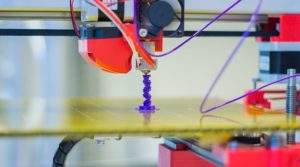
Collaborative robots can work alongside employees to make their jobs easier, quicker, and safer, while 3D printing improves the process of designing and creating prototypes.
Reliable Supply Chains
One of the biggest manufacturing changes to come out of the 2020 lockdowns was the need to diversify supply chains. Companies that previously relied on one supply chain suddenly realized that their entire operations could be brought to a halt by the closure of a single border.
In the years since, we’ve seen more companies diversify their supply chains, creating a Plan B and a Plan C in case their Plan A fails. Not only does it mean they are prepared for the worst-case scenario, but it also gives them a viable option if their initial supplier hikes their prices or stops producing high-quality materials.
Many manufacturers have also turned their focus inwards, using more suppliers based across North America to reduce supply chain and transport issues.
A Shift Toward Green Energy
In recent years, many governments around the world have pushed to create greener and more eco-friendly energy alternatives. Sales of electric vehicles are increasing, and the same is true for wind turbines and solar panels. Metals like steel, copper, and aluminum are the building blocks on which so many green energy alternatives rely. By shifting their focus to creating parts for this industry, manufacturers can cash in on a growing trend that only seems to be heading in one direction.
Many companies are also willing to pay a premium for recycled metal, reducing their carbon footprint and creating opportunities for their suppliers.
Meeting Challenges and Embracing Opportunities
The last few years have been very difficult for metal manufacturers, and they’re not the only ones. Many industries have changed completely, and as the demand for green energy increases and AI technologies continue to improve, it’s clear that those changes are here to stay.
Successful companies are the ones that learn to adapt to these changing times; companies that find their niche and turn a challenge into an opportunity.
For many companies, it all starts with a quality, industry-specific ERP like RealSTEEL™. Not only does it include various automation features, but it also gathers high-quality data from across the company and then turns this data into valuable insights and predictions, driving the organization forward.
To learn more, contact a RealSTEEL™ representative today or request a demo.